A while back I was sitting next to an Australian chap on the flight to Venice. We started to chat and I asked him what he was planning to see and do and how he planned to get around. His one must-do thing appeared to be a gondola ride and he’d never heard of the Piazza San Marco or the Rialto. Odd to say the least.
As to how he’d get around he didn’t even have a clue how he was going to get from the airport into the city, or where his hotel was. Adventurous fellow. Don’t be like him though. Venice is unique when it comes to transport as well as everything else.
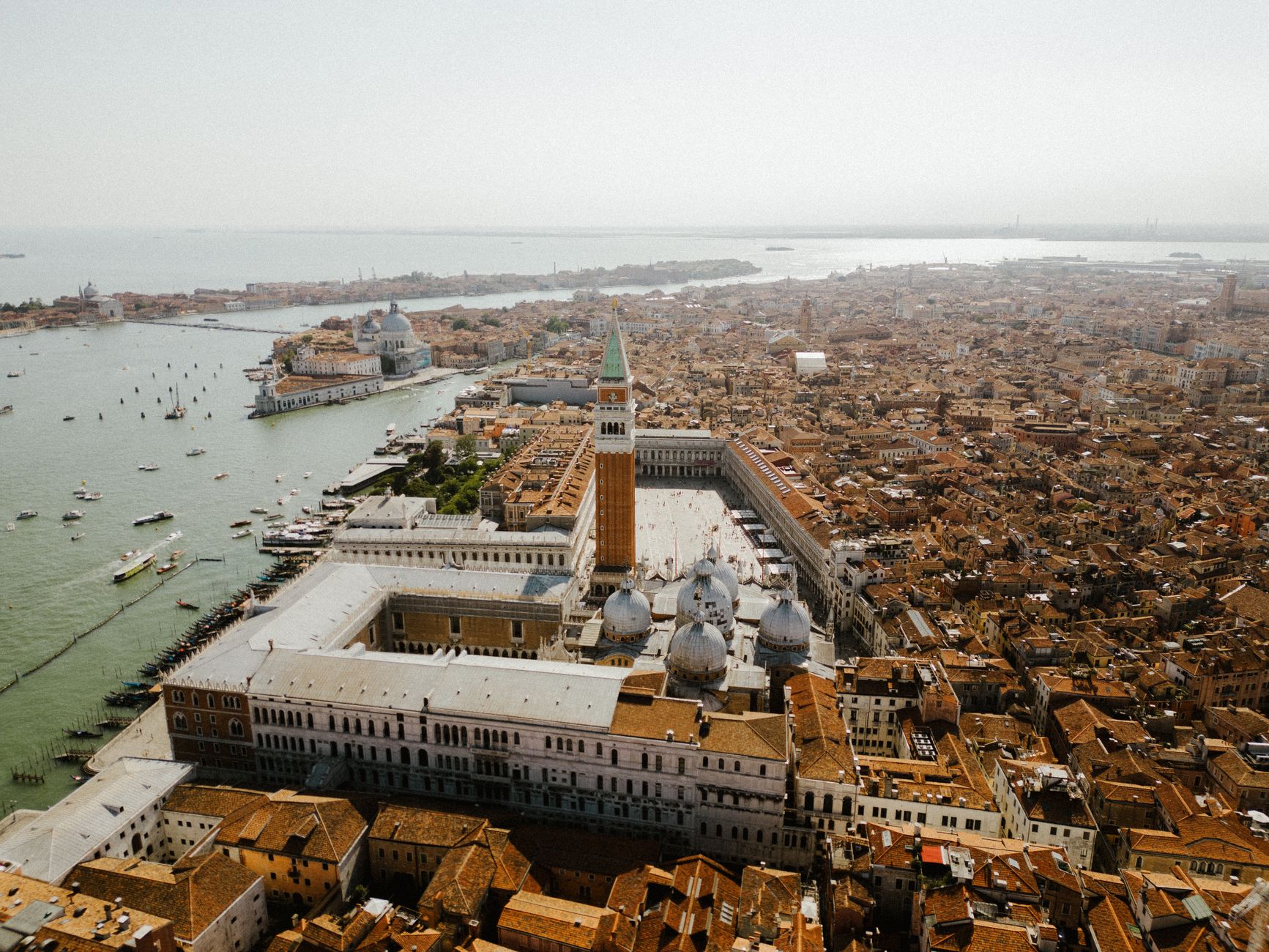
You probably know this already but let me repeat it: The city of Venice has no cars, no trams, and no buses. The Lido is different — there are cars and buses, more of the latter shortly. But as far as the city and the outlying islands — Murano, Burano and Torcello — are concerned everything that moves does so on water or on foot.
That’s the wonder of the place when you’re used to it. But this does mean you really need to get up to speed with how things work before you turn up. Everyone gets lost in Venice at some point — I still do after thirty years — but it’s best not to do that on the way to the hotel after a long journey.
From Marco Polo airport
The airport is on the mainland, about twelve kilometres from the city. You have five sensible choices.
The bus: cheapest and quickest. The ATVO express runs from outside arrivals to Piazzale Roma, the road terminus on the edge of Venice, in around 20 to 25 minutes. It costs €12 single or €20 return. There used to be a very simple website where you could book this and get a discount. But this seems to have disappeared and you now have to enter the destinations separately at this dreadful new site so I’d just buy a ticket when you’re waiting for the bus. There are two services an hour and they get very busy at the peak of the season. You can find what I hope is the current timetable here (the new ATVO site makes this very hard to find).
The ACTV Aerobus (line 5) goes to the same place at a similar price but unlike ATVO stops along the way, takes longer and isn’t so good for luggage. It is more frequent — you can find the timetable here — but a sight less comfortable. The two companies have almost identical names, which confuses everybody. From Piazzale Roma you’re on foot or on a vaporetto.
Alilaguna: the slow scenic option. This is the airport water bus, run privately and not covered by your vaporetto ticket. It’s €18 single, €32 return. It takes anywhere from 60 to 90 minutes, depending on where you’re going, but it drops you at a landing stage closer to your hotel than the bus does. Extra bags cost €4. The last boats leave the airport between about 23:00 and 00:20, so late arrivals need another plan. But — and this is a big but — the boats are terribly slow, quite old, and few offer anything in the way of a view. If you think the Alilaguna is going to give you a romantic entrance to Venice by water you are likely to be disappointed.
Water taxi: the grand entrance. A private water taxi takes 25 to 30 minutes and can drop you at the nearest landing to your hotel, or at its own water door if it has one. The official fixed fare is €110, but the Consorzio Motoscafi quotes €160 for 2026 and most sources put it at €110 to €160 per boat for up to about five passengers, so it pays to ask in advance. A night surcharge applies. It’s the best way to arrive in Venice, and for a group of three or four sharing the cost it’s not as extravagant as it sounds. But bear in mind the boat jetties are quite a long way from the airport on a first-floor travelator. It can take you as long to get from picking up your luggage at arrivals and getting to the boat as it does to get into town.
Shared water taxi: the compromise. If you’re one or two people who want the water arrival without the private price, a shared boat costs about €30 to €40 per person. The way it works: you collect your bags, meet at the dock, and the boat leaves once enough passengers have gathered, with a maximum wait of about 40 minutes. It then makes several stops, so you may be dropped near your hotel and walk the last two or three minutes rather than being delivered to its door.
Do people recommend the shared service? Mostly, yes. The GetYourGuide listing for the return trip to the airport has 4.3 stars from over 2,300 reviews, and one reviewer on the arrivals version called it great value for semi-private transport. The usual complaints are waiting time and crowding: one traveller waited 25 minutes and shared the boat with eleven others, another found it packed with eight aboard. A Tripadvisor poster also points out that for three or more people the maths no longer works, because a private taxi at the fixed fare comes out about the same. I’ve never used this so I can’t pass judgment but you can find the booking link here.
Road taxi. A land taxi will take you to Piazzale Roma in 20 minutes for a fixed fare of €40, which is good value if there’s more than one of you. You may have to wait for a taxi to arrive at times though. If they’re late just cross over the road and pick up the ATVO bus instead if that arrives. If you’re staying in Dorsoduro near Zattere bear in mind that for a fixed fare of €45 the taxi will drop you off by San Basilio at the small port. Walking distance to nearby hotels.
I always use either bus or taxi because they are quick and a sight cheaper than a water taxi.
Getting around: the vaporetto
Here’s the big tip: most of central Venice is walkable, and it’s the best way for short distances. Yes, you will get lost but both Google and Apple Maps are now pretty good with walking directions. Taking a vaporetto to go from San Marco to say Arsenale or Giardini is crazy frankly — just take the lovely promenade along the Basin of Saint Mark. But for longer distances and trips to the islands you will need the public water bus services run by ACTV.
Some etiquette on these. If you have luggage use the stowage areas to allow other people access to the deck and seats. The first rows in the boat are reserved for the elderly, pregnant women and people who aren’t terribly mobile. This is very visibly pointed out on the seats and if you’re one of the many tourists who ignore this expect and deserve a mouthful from a local. If you have a rucksack, take it off and carry it on your front or on the ground — again there are signs asking you to do this and it’s downright rude to ignore them.
Tickets. A single costs €9.50 and is valid for 75 minutes, with unlimited changes within that time on the water buses and, within the city, on the ACTV land buses, the Mestre tram and the People Mover. It does not cover Alilaguna or the airport routes. Unless you only take one or two rides a day you’re better off buying these passes:
- 24 hours: €25
- 48 hours: €35
- 72 hours: €45
- 7 days: €65
The best place to plan and buy all this is Venezia Unica where you can also buy tickets for the main sights.
Validate every time. Touch your ticket or pass to the reader at the stop before you board, every single time, even with a multi-day pass. Inspectors board without warning, and an unvalidated ticket draws a fine of around €60 on top of the fare. Tickets are also sold at machines, at ACTV booths and online, and at tobacconists (look for the blue sign with a white T). There is an ACTV app available for iPhone and Android but unless you’re a regular visitor I’d stick with a simple ticket.
The two busiest lines for visitors are Line 1, the slow Grand Canal service, calling at nearly every stop from Piazzale Roma to the Lido. It’s about 45 minutes from the station area to San Marco, crowded and a wonderful way to experience the Grand Canal for the first time, the cheapest sightseeing tour in the city.
Line 2 is the faster version, skipping minor stops between the station, Rialto and San Marco, then running on to Giudecca and the Zattere and the Lido during summer.
Bear in mind your ACTV pass covers the whole lagoon, boats out to Murano, Burano and Torcello and the buses on the Lido. So you can travel the length of the lagoon from Torcello in the north to Chioggia in the south on ACTV services without paying another cent.
Arriving by train
If you’re coming from Milan, Florence, Rome, Bologna or anywhere else on the high-speed network, you’ll arrive on a Frecciarossa or an Italo. Aim for Venezia Santa Lucia, which is on the island itself. Step out of the station and the Grand Canal is right in front of you, with the vaporetto stop at the door. It’s one of the great arrivals in Europe.
Journey times to Santa Lucia, roughly:
- Milan: about 2.5 hours
- Florence: about 2 hours
- Rome: about 3.5 hours
Check the name on your ticket. Venezia Mestre is the mainland station, about ten minutes from Santa Lucia by regional train, and many trains stop at both. Unless your hotel is in Mestre, you want Santa Lucia, because Mestre adds a transfer. And bear in mind that luggage space on Italian trains is often sparse. If you turn up with lots of cases you may regret it.
A few things nobody tells you
- Steps and bridges. Venice is full of them, and a heavy suitcase makes you wish you’d taken the water taxi. Pack lighter than you think you need to.
- Piazzale Roma and the station are separate stops. They are a short walk apart. The People Mover connects Piazzale Roma to the Tronchetto car park and is included in a standard ACTV ticket.
- Strikes. Italian transport strikes are common and usually announced in advance. Check before you travel.
- Late arrivals. After about midnight the airport bus and Alilaguna thin out and then stop. Book a taxi, shared or private, in advance.
- The traghetti. Gondola ferries cross the Grand Canal at several points for a couple of euros, standing up like a local. It’s the best value ride in the city.
- The day-tripper access fee. In 2026 it was charged on 60 peak days between April and July: €5 if booked in advance, €10 if late, for visitors without an overnight booking. It’s finished for this year, and the 2027 dates will follow. If you’re staying in an apartment you can circumvent the fee by filling in a tedious form for the whole — and pointless — process.
In short
You’re going to be in one of the few cities in the world where there’s no road traffic. Walking and taking vaporetti are both delightful. Just be prepared in advance.